Hurricane and Storm Cleanup for Gainesville Homes
Doctor Sterile·September 1, 2026
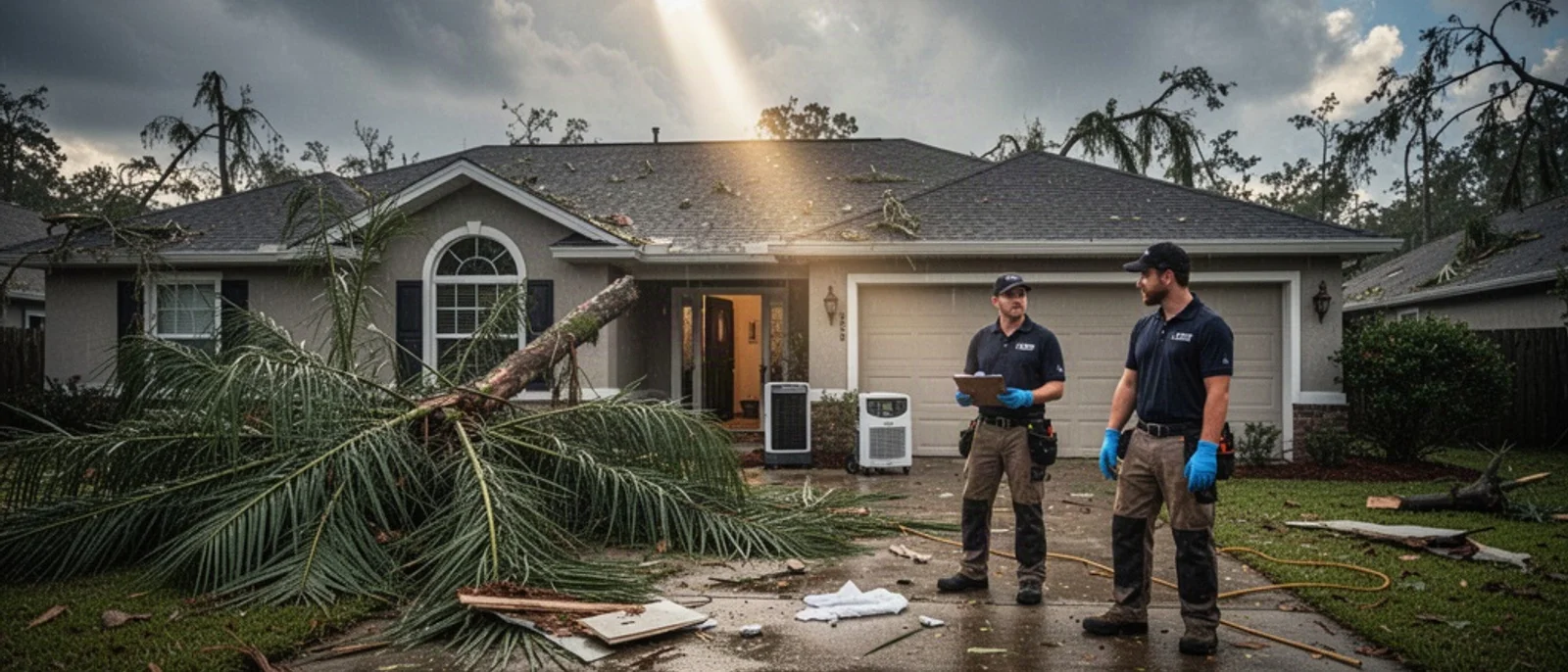
Hurricane season runs June through November in North Central Florida, and Gainesville sits far enough inland that direct hits are rare — but tropical storms, heavy rainfall, and power outages are not. Here is what to do when a storm leaves your home with water, debris, or damage, and when we can help versus when you need someone else.
What to do in the first 24 hours
The first day after a storm determines whether you get a cleanup or a remediation project. Mold can begin colonizing damp drywall within 24–48 hours in Florida's humidity, so speed matters.
If you have standing water: Do not enter until you have confirmed no downed power lines are in contact with the water. Once safe, document everything with photos for insurance before moving anything. Remove standing water with a wet-dry vacuum or pump. Open windows and run fans if power is available. Remove wet rugs, upholstered items, and cardboard immediately — these are mold highways.
If you have debris but no water intrusion: Clear debris from around HVAC units and drains first. This prevents secondary flooding. Then work inside: sweep broken glass, remove fallen branches or ceiling material, and check for roof leaks by inspecting ceilings for staining or dripping.
Need help now? Call us at 352-663-5924 — we can assess whether your situation needs cleaning or remediation.
If you lost power but have no damage: Your biggest risk is the refrigerator. Food that has been above 40°F for more than four hours needs to be discarded, and the resulting organic matter will need a full interior cleaning before you restock.
Preventing mold after water intrusion
Mold prevention after a storm is about removing moisture before spores establish. The critical window is 24–48 hours. After that, you are managing growth rather than preventing it.
Run dehumidifiers continuously — the target is below 50% relative humidity. In Gainesville, where ambient humidity often exceeds 70%, this means dehumidifiers are running against the environment. Open interior doors to promote airflow. Remove baseboards if walls got wet — this exposes the bottom few inches of drywall to air circulation. Pull furniture away from exterior walls.
Porous materials that stayed wet for more than 24 hours are often unsalvageable: carpet padding, particle board shelving, cardboard boxes, mattresses. Hard surfaces — tile, sealed concrete, metal, glass — can be cleaned and disinfected. The distinction matters because it determines whether you need cleaning or replacement.
What we can and can't help with
We can help with:
- Post-storm general cleaning: debris removal (non-structural), mopping, disinfection of hard surfaces
- Refrigerator and kitchen cleanout after extended power loss
- HEPA-filtered vacuuming of fine debris and drywall dust
- Surface mold on hard, non-porous surfaces (tile, sealed concrete, glass) using EPA-registered disinfectants
- General restoration of living areas after minor wind or water events
We cannot help with:
- Structural water damage (saturated drywall, subfloor damage, compromised insulation)
- Mold remediation involving containment, HEPA air scrubbing, or removal of building materials
- Sewage backup or contaminated floodwater cleanup
- Tree removal, roof repair, or structural work
- Anything requiring IICRC certification or a Florida mold remediation license
The distinction is not about willingness — it is about licensing, liability, and doing right by you. Surface cleaning after a minor event is well within our scope. Remediation after a major flood requires equipment, certifications, and insurance coverage that a cleaning company does not carry.
Call 352-663-5924 to describe your situation — we can tell you quickly whether we can help or whether you need a remediation company.
When you need a remediation company instead
Call a licensed remediation company when:
- Water reached above the baseboard line on drywall
- You can see or smell mold growth on porous materials
- The water source was contaminated (sewage, storm surge, standing drainage)
- Your insurance adjuster requires certified remediation documentation
- The affected area exceeds a standard room or involves HVAC contamination
Alachua County has several licensed remediation firms. Your insurance company will typically have a preferred vendor list. If you are unsure whether your situation needs cleaning or remediation, ask your adjuster — they see hundreds of claims per storm and can tell you quickly.
If your home needs cleaning after the remediation crew finishes their work, that is where we come back in. Post-remediation cleaning — dusting, mopping, disinfecting the surfaces they exposed — is standard cleaning work and we handle it regularly.
Ready for Post-Storm Help?
Call 352-663-5924 to talk to us directly. Storm situations are time-sensitive and a phone call beats a form.
We also offer deep cleaning for post-storm resets and recurring residential service to maintain your home year-round.
Ready for a spotless space?
Book a visit and see why Gainesville trusts Doctor Sterile.